
What leads people to behave differently although experiencing the „same“ situation?
How and why does this behavior differ between people?
Can you predict peoples actions by understanding their „personality“?
In psychology many different approaches exist to describe habits in behavior, thought and emotion. Especially psychologists working in the field of trait theory are trying to find personality traits, that predict a variety of variables. These traits are very stable over time, differ between individuals, are consistent over different situations, and influence behaviour. The values and attitudes behind the traits have an effect on the frequency and the comfort with which people eat meat.
Personality traits are stable and influence behaviour.
Although many different systems of traits were developed, one stands out and shows the greatest consistency over all psychological domains: The Big Five.
The underlying assumption of this model is that expressions of personality traits are such an integral part of our evolution, that these hypothetical traits are reflected in our language. After creating lists of adjectives and using these to create personality-survey-data, the researchers found the „Big Five“ via factor analyses (a method to find out which adjectives „clumped“ together). These five traits showed to be some of the best predictors of psychopathologies, work performance, and other essential researched outcomes in psychology.
| Traits | …….. | associated with… |
|---|---|---|
| Openness to experience | creativity, curiosity, unconventional beliefs… | |
| Conscientiousness | self-discipline, striving for achievement… | |
| Extraversion | outgoing, energy from external sources… | |
| Agreeableness | concern for social harmony, trustworthy… | |
| Neuroticism | anxiety, depression, emotional instability… |
Associations between Traits and Eating Choices
The Big Five and Meat Consumption
Regarding sociodemographics, vegetarianism is stronger associated with being female, young, more educated and having a higher income1. Females are not only more likely to be vegetarian, but also more likely to choose vegetarianism for ethical reasons2 3.
Regarding the Big Five, vegetarians show higher scores in openness to experience, but lower in conscientiousness, while vegans on the other hands show high scores in openness as well as lower neuroticism scores (= higher emotional stability). Conversly people who state to be open and agreeable tend to eat less meat than the average of the population1 4.
Especially ‚openness to experience‚ is associated with reduced meat consumption.
The effect of openness also showed itself in the political engagement, with vegetarians and vegans showing greater scores in political interest. Since meat-eaters scored higher in conscientiousness, it was expected and also found, that they had higher conservatism scores. Furthermore the higher scores in openness and lower neuroticism in Veg*s were accompanied by being more trusting and optimistic than meat-eaters1.
Social Dominance and Authoritarianism
In social psychology there are two very strong predictors of racism, sexism and other forms of oppression: social dominance orientation (SDO) and right-wing authoritarianism (RWA). Both are associated with support for hierarchy and inequality values. Since the theoretical frame of intersectionality suggests that all forms of oppression are interconnected, there have been studies that tried to show connections between these two constructs and meat-eating.
SDO is the endorsing of the idea, that some groups are of higher worth than others and by that should dominate these lower groups. People who are high in RWA tend to submit to authorities, see them as established and legitimate, and value uniformity. They adhere to societal norms and are punitive towards people who don’t. Regarding meat consumption, people with higher SDO scores tend to eat more meat (dominating the „lower animal group“)5 6 7.
Intersectionality is a term coined by Kimberlé Crenshaw in her 1989 essay „Demarginalizing the Intersection of Race and Sex: A Black Feminist Critique of Antidiscrimination Doctrine, Feminist Theory and Antiracist Politics.“ It is the hypothesis of the interconnected nature of all forms of oppression: from racism, sexism, to classism, ableism, and speciesism. Many studies in this fields since supported this idea (here we are dealing with research regarding meat consumption).
Conversly people who eat more meat have higher scores in both SDO and RWA. Some psychologists argue, that this connection indicates an acceptance of cultural tradition and the rejection of nonconformist animal rights groups6.
A different approach of examining personality differences between veg*s and meat-eaters is the construct of moral disengagement, which is the convincing of one’s self that ethical standards do not apply in a particular situation. People who show higher levels of moral disengagement regarding meat consumption, show lower levels of general empathy, and tend to experience e.g. guilt and shame when considering the consequences of this consumption. They support hierarchies and power (SDO), and attribute less importance to moral traits8.
Masculinity and Meat Consumption
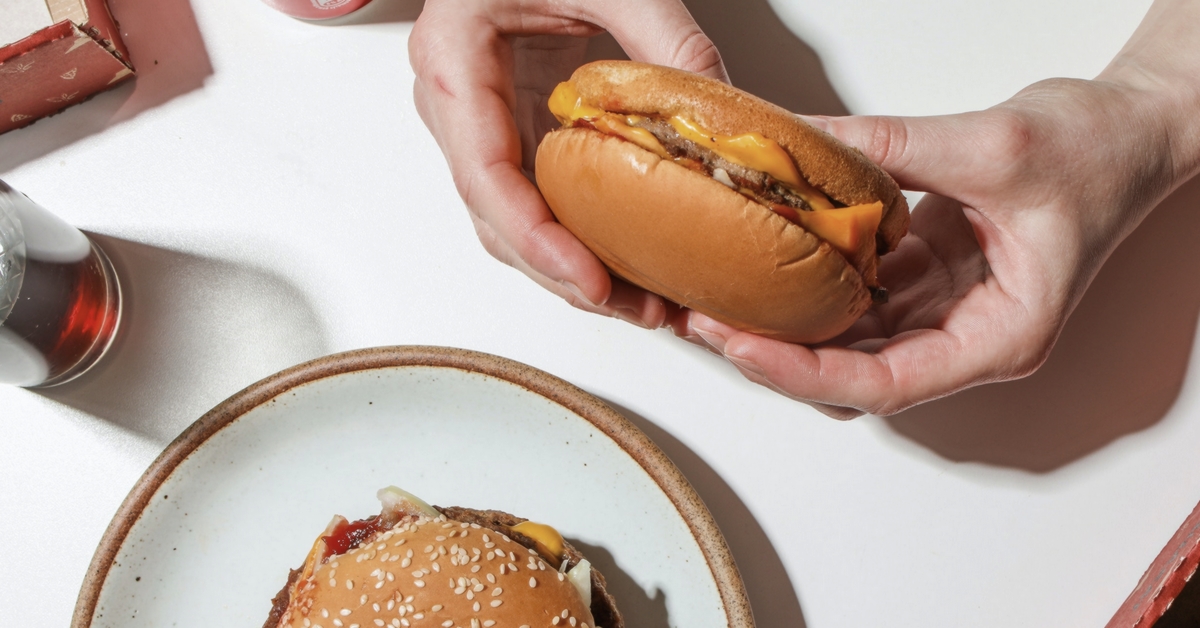
Since it is known that men eat more meat than women, this association was further focused in social psychology. In a study from 2012 people rated steak and hamburgers as more „male“ than others. An implicit association test (IAT) showed that meat words were paired faster with typically male than female names9 10.
The IAT is often used to explore implicit (unconsious) stereotypes. It is intended to show connections between differing concepts, while differences in the strengh of connectedness result from the hypothetical ‚distance‘ of these concepts in the participants‘ mind. This distance is ‚measured‘ through reaction times which result from pairing respresentives of the concepts (here: meat and female vs. male names).
A Canadian study showed that perceptions of masculinity were linked to beef consumption11. Participants in a different study who were either ominivores or vegetarians, both rated vegetarians as less masculine12. In another study masculinity was shown to be associated with beef eating, and negatively correlated with vegetariansim13. A review from 2016 linked the discrepency between the amount of male and female meat consumption to the symbolic role meat plays in Western culture, where meat is associated with power and strengh and thus with male gender roles14.
Other studies show that men, whose masculinity was questioned, chose to eat more meat pizza and less vegetable pizza – a result that was postulated and fits the frame of impression management9 15.
Impression management is defined as a conscious or subconscious process, by which people try to influence the perceptions of other people by regulating and controlling information in social situations.
Dietary choices thus show to influence perceptions of the eater’s masculinity or femininity (with meat being strongly correlated with perceived masculinity).
Who cares?
Why should we be interested in this hypothetical construct of „personality“? Why bothering with conducting time-consuming studies and learning about the results?
By knowing the demographical variables that are associated with meat consumption, animal activist groups, and espescially animal liberation organizations are able to tailor their financial and time resources around target groups – but what are the benefits of personality trait studies?
1st: they are more differentiated than demographical variables.
By knowing about traits like SDO, RWA, openness, etc. we get the opportunity of further tailoring campaigns, or e.g. health interventions, because we know which people to target first and foremost.
2nd: they are stable predictors of behavior.
While demographical variables are an important foundation of information, personality research is dealing with variables which by definition are stable, and influence behaviour (which is, among other, tested by validating results in real-life-settings). By having access to this knowledge, it gets possible to conduct studies and campaigns which have a real-life-effct (by influencing the behaviour), as well as a long-lasting effect (because of the stability of these traits).
So in the long run, by concentrating on variables that have a proven effect on meat consumption, we have the possibility of designing more effective animal advocacy campaigns with long-lasting effects, while also concentrating on target groups that will most likely be open for animal liberation or at least meat reducement ideas.
Overview
Demographics.
Veg*s are more likely to be female, young, more educated and having a higher income. Females are more likely to choose veganism because of moral arguments.
Big Five.
Personality traits are stable constructs, that predict behaviour. Regarding meat consumption psychological research shows strong associations between openness to experience and vegetarian- and veganism. Furthermore Veg*s show lower neuroticism-scores. Conscientiousness on the other hand is related to higher meat consumption.
SDO & RWA.
Conscientiousness is related to conservative views, social dominance orientation (SDO) and right-wing authoritarism (RWA). SDO & RWA are associated with support for hierarchy and inequality values. They are strong predictors of all sorts of discrimination. People with higher SDO and RWA scores tend to eat more meat.
Masculinity.
The discrepency between the amount of male and female meat consumption can be explained by the symbolic role meat plays in Western culture. It is associated with strengh and power, and thus with male gender roles. Many studies emphasize this connection (e.g. the impression management or implicit association test).
1 Pfeiler, T., Egloff, B. (2017). Examining the „veggie“ personality: Results from a representative German sample. SOEP papers on Multidisciplinary Panel Data Research, 941. (click here to read the whole article)
2 Amiot, Catherine E.; Bastian, Brock (2015). Toward a psychology of human-animal relations. Psychological Bulletin. 141 (1): 6–47. (click here for the whole article)
3 Ruby, Matthew B. (2012). Vegetarianism. A blossoming field of study. Appetite. 58 (1): 141–150. (click here for the whole article).
4 Keller, C., Seigrist, M. (2015). Does personality influence eating styles and food choices? Direct and indirect effects. Appetite. 84: 128–138.
5 Dhont, K., Hodson, G., Costello, K., MacInnis, C. (2014). Social dominance orientation connects prejudicial human–human and human–animal relations. Personality and Individual Differences. 61: 104–108.
6 Dhont, K, Hodson, G. (2014). Why do right-wing adherents engage in more animal exploitation and meat consumption? Personality and Individual Differences. 64: 12–17. (click here to read the whole article)
7 Allen, M., Ng, S. (2003). Human values, utilitarian benefits and identification: the case of meat. European Journal of Social Psychology. 33 (1): 37–56.
8 Graça, J., Calheiros, M., Oliveira, A. (2016). Situating moral disengagement: Motivated reasoning in meat consumption and substitution. Personality and Individual Differences. 90: 353–364.
9 Vartanian, L. (2015). Impression management and food intake (PDF). Appetite. 86: 74–80. (click here to read the whole article)
10 Rozin, P., Hormes, J., Faith, M., Wansink, B. (2012). Is Meat Male? A Quantitative Multimethod Framework to Establish Metaphoric Relationships. Journal of Consumer Research. 39 (3): 629–643.
11 Loughnan, S., Bastian, B., Haslam, N. (2014). „The Psychology of Eating Animals“. Current Directions in Psychological Science. 23 (2): 104–108. (click here to read the whole article)
12 Ruby, Matthew B.; Heine, Steven J. (2011). Meat, morals, and masculinity. Appetite. 56 (2): 447–450. (click here for the whole article)
13 Rothgerber, H. (2013). Real men don’t eat (vegetable) quiche: Masculinity and the justification of meat consumption. Psychology of Men & Masculinity. 14 (4): 363–375. (click here to read the whole article)
14 Büning-Fesel, M., Rückert-John, J. (2016). Warum essen Männer wie sie essen?. Bundesgesundheitsblatt (in German). 59 (8): 1–7.
15 Lipschitz, L. (2009). Being Manly Men: Conveying Masculinity Through Eating Behaviour. University of Toronto. (click here for the whole article)
 studies in green.