
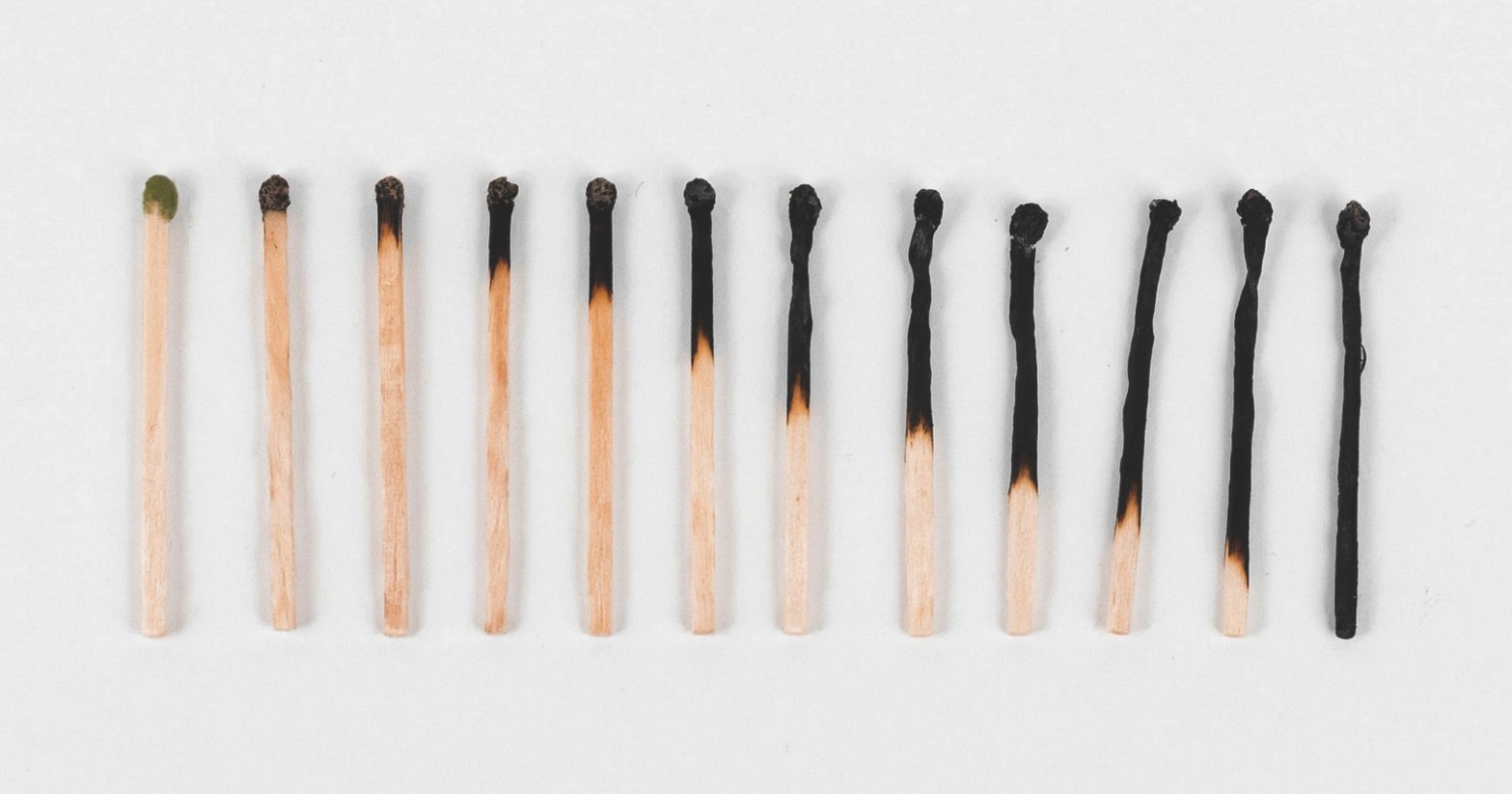
Managing the fear of death.
Almost every person fears death. The ways in which this fear is influencing our decision-making is investigated by the conceptual framework of the Terror Management Theory. Many experiments show, that when we think about our death, we lean towards protecting our self-esteem and worthiness as well as sustainability. We act in ways that support the notion of being an important being in a meaningful world. Although this way of coping seems helpful at first, it also has it’s downsides.
Building on work of anthropologist Becker (1973)1, many Terror Management theorists (e.g. Greenberg, Solomon, & Pyszczynski, 19972) argue that being reminded of the biological fate humans have to face, leads to anxiety, which needs to be reduced.
Because of the need of heightened self-esteem to reduce this anxiety, people who think about their death (mortality salience) show more positive judgments reagarding their own group, and tend to see outgroups more negatively. This elevation of the ingroup is the result of identifying with something that will outlast the physical body (e.g. family, nation, one’s work). Reminders of one’s death thus increase the individuals need to maintain these structures.
mortality salience (MS):
Activating thoughts about the own mortality, means that mortality becomes ’salient‘, it is now a focal point from which the next information is interpreted, integrated and so on. MS is often manipulated in an experimental group by telling the people of this group to write a short text about their death.
Being an Animal.
One of these reminders of our mortality – and a very common one – is the thought of ourselves as being an animal, because it stresses our biological vulnerability. People are therefore motivated to elevate themselves beyond the animal (and thus the mortal) status. Like mentioned above, this reminder also increases the individuals need to maintain the cultural worldview in which there is a great gap between us and other animals in order to elevate the self-esteem and reduce anxiety. College students in the mortality salience group for example evaluated an essay (and authour) describing humans and animals as similar as more negatively than one that focused on the differences3.
In a different study, a scenario about breast-feeding was presented. Mortality salience led to negative reactions toward this scenario depicting a woman breast-feeding her infant in public. The people in this condition rated bottle-feeding mothers as more positive. Since breast-feeding serves as reminder of the animal nature of humans, people tend to endorse the alternative scenario.4
A study conducted by Beatson, Loughnan and Halloran (2009)5 showed that even in the realm of pet owners, the people from the mortality salience manipulation group responded more negative attitudes towards the average pet. The effect was greatest, when both human creatureliness and personal mortality was made salient. Creatureliness in this context was manipulated by making the participants read a paragraph emphasizing how the „boundary between humans and animals is not as great as most people think“. So when thoughts about the animal nature of humans, as well as thoughts about mortality were activated the attitudes towards pets were the lowest.
This effect was not observed when the participants had to rate their attitudes toward their own pet. Close animal-human relationships thus can serve a positive function in the Terror Management framework. In this case participants don’t devalue their pets as a reaction of mortality salience and creatureliness, but instead include them in their ingroup.
Implications for Animal Welfare.
Emphasizing human-animal similarities has often shown to improve attitudes towards animals. However, when mortality cues are present (e.g. picures of dead animals), participants show more positive attitudes towards animals, when the differences between humans and animals are stressed.
When campaigns show such pictures, they should therefore avoid combining them with focusing on the similarities but rather emphasize the unique position humankind is in to show compassion to the creatures that are dependent on us.
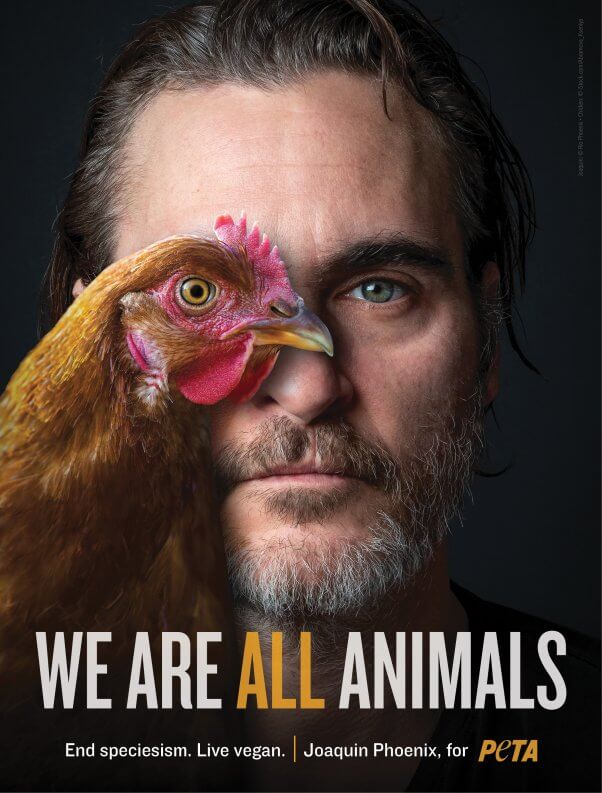
Campaigns like this are effective, when they are not combined with pictures of (near) dead animals or other death cues. In the case of death cues, the emphasis should lie on the responsibility we as humans have instead on the similarity.
Sources.
1 Becker, E. (1973). The Denial of Death, The Free Press.
2 Greenberg, J., Solomon, S, & Pyszczynski, T. (1997). Terror Management Theory of Self-Esteem and Cultural Worldviews: Empirical Assessments and Conceptual Refinements. Advances in Experimental Social Psychology. 29. 61-139.
3 Goldenberg, J., Pyszczynski, T., Greenberg, J., Solomon, S., Kluck, B. & Cornwell, R. (2001). I Am Not an Animal: Mortality Salience, Disgust, and the Denial of Human Creatureliness. Journal of Experimental Psychology: General. 130. 427-435.
4 Cox, C. R., Goldenberg, J.L., Arndt, J., & Pyszczynski, T. (2007). Mother’s Milk: An Existential Perspective on Negative Reactions to Breast-Feeding. Personality and Social Psychology Bulletin. 2007; 33(1): 110-122.
5 Beatson, R., Loughnan, S., & Halloran, M. (2009). Attitudes toward Animals: The Effect of Priming
Thoughts of Human-Animal Similarities and Mortality Salience on the Evaluation of Companion Animals. Society and Animals, 17, 72-89.
 studies in green.
Ein Kommentar zu “Death reminders lower attitudes towards animals”